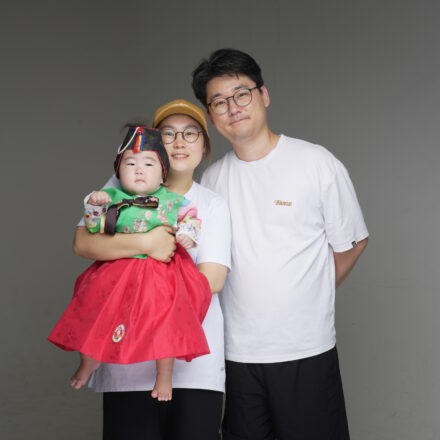

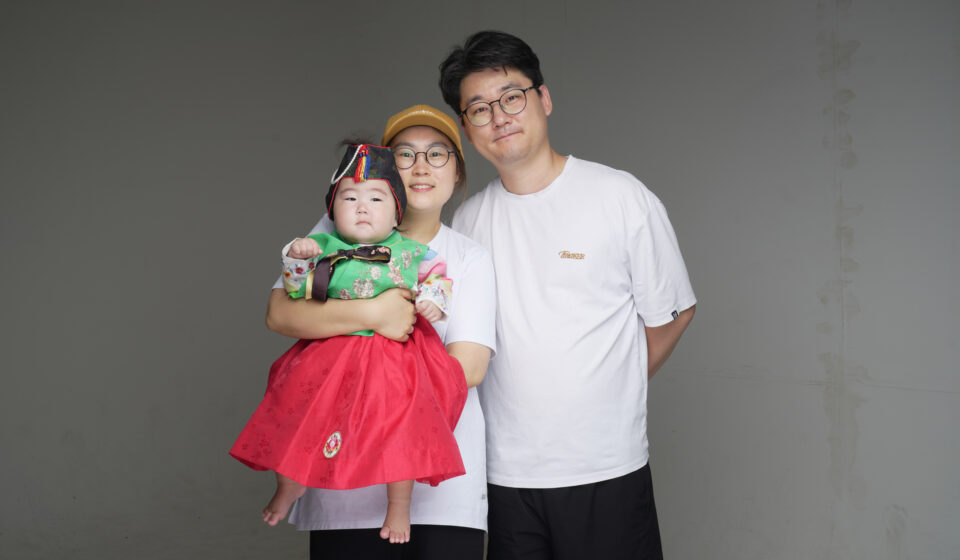

Doljanchi is the traditional Korean celebration of a baby’s first birthday. Its main event, Doljabi, involves letting the baby choose an object believed to symbolize their future fortune or career.
Table Of Content
- 🎂 What is Doljanchi? (The Traditional Meaning)
- 👨👩👧 The Modern Shift: Intimate and Minimalist Celebrations
- 🎤 The Highlight: The Doljabi (돌잡이) Ceremony
- Doljanchi Frequently Asked Questions
- What should I bring as a gift to a Doljanchi?
- What does Baekseolgi symbolize?
- Do modern Koreans still hold large Doljanchi parties?
On June 11th, our family celebrated our youngest daughter’s first birthday. Raising three girls is a constant adventure, and this one-year milestone filled our home with joy and gratitude. Here is a guide to the tradition, its modern forms, and our family’s cozy celebration.
🎂 What is Doljanchi? (The Traditional Meaning)
In Korea, a baby’s first birthday is considered one of the most important milestones in their life. Historically, due to harsh living conditions and low survival rates, making it to the first year was a massive cause for celebration.
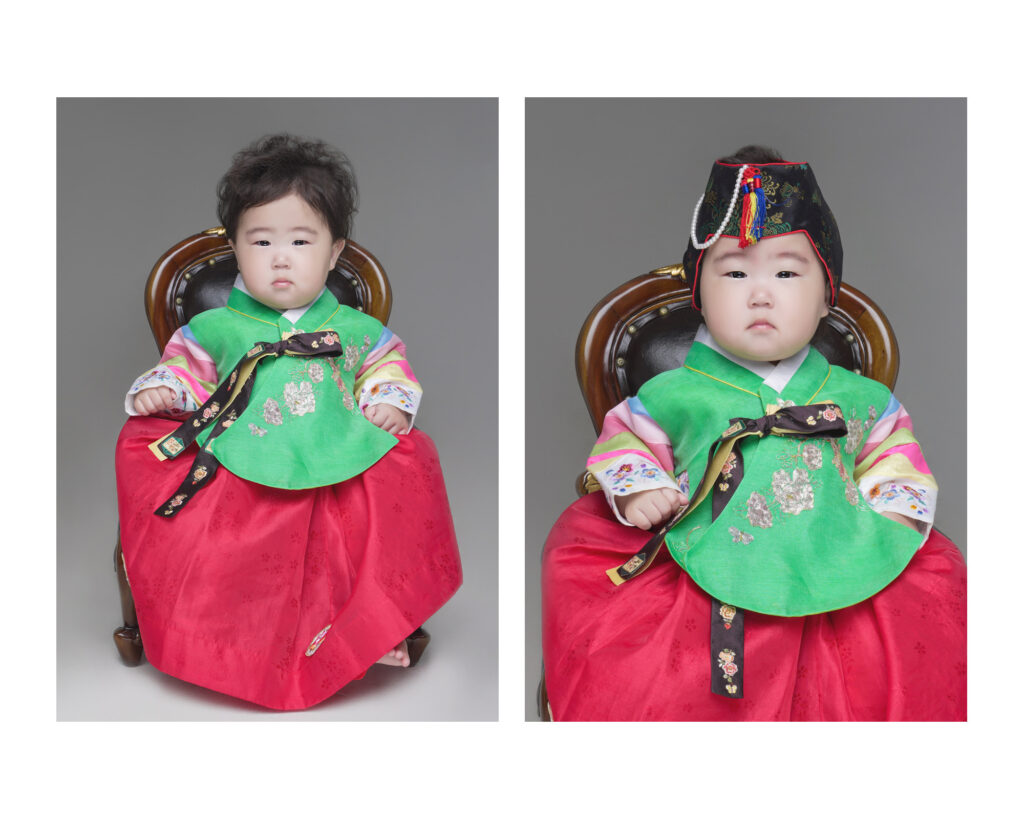
Whole villages would gather to share food, bless the child with long life, and celebrate their health. Traditionally, parents would dress the baby in a vibrant, colorful Hanbok (traditional Korean clothing) and prepare a grand feast filled with specific types of rice cakes, such as Baekseolgi (white steamed rice cake for purity) and Susupatteok (red bean rice cake to ward off evil spirits).
👨👩👧 The Modern Shift: Intimate and Minimalist Celebrations
While the core meaning of Doljanchi remains, the way we celebrate has evolved significantly.
In the past, parents would rent huge banquet halls and invite hundreds of guests, including extended family, friends, and coworkers. However, a major modern trend—especially for a family’s second or third child—is simplification.
For our eldest daughter, we had a more traditional gathering. But since this is our third time around, we opted for a highly modern, minimalist approach. Instead of a lavish banquet, we focused on what truly matters: making core memories together as a family. We simply ordered traditional rice cakes, set up a small table at home, and spent quality time together.
Of course, we didn’t skip the most important part—the photos! We took her to a studio to capture her wearing a beautiful traditional Hanbok.
🎤 The Highlight: The Doljabi (돌잡이) Ceremony
You cannot talk about a Korean first birthday without mentioning the Doljabi (돌잡이). This is the main event of the party!
Parents lay out various items on a table in front of the baby. The item the baby grabs first is said to predict their future career or fortune. Traditional items include:
| Item | Traditional or modern meaning |
|---|---|
| Thread or yarn | A long and healthy life |
| Money | Wealth and prosperity |
| Brush or book | Academic success or scholarship |
| Stethoscope | A future in medicine |
| Gavel | A future in law |
| Microphone | A future in entertainment or broadcasting |
We set up a simple Doljabi tray on our dining table. Out of all the items, our youngest daughter confidently reached out and grabbed the microphone!
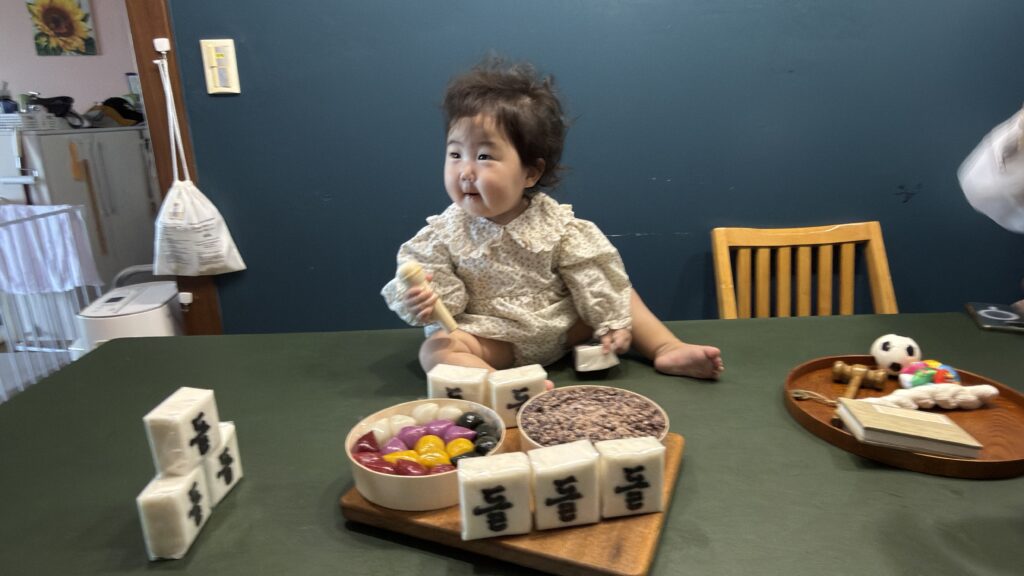
Will she become a famous news anchor? Or perhaps a K-Pop singer? We don’t know what the future holds, but as her dad, my only wish is that she grows up to be a bright, healthy, and happy person.
Doljanchi Frequently Asked Questions
If you are invited to a Korean first birthday party, here are the essentials.
What should I bring as a gift to a Doljanchi?
A traditional gift is a small 24k gold ring (돌반지, Dol-banji), symbolizing health and financial security. Cash in a clean envelope is a common modern alternative.
What does Baekseolgi symbolize?
Baekseolgi is a white steamed rice cake placed on the birthday table. It symbolizes the baby’s purity and the family’s wish for a bright future.
Do modern Koreans still hold large Doljanchi parties?
Some families still hold large celebrations, especially for a first child. Others choose a small Doljanchi with immediate family, a meal, rice cakes, a Doljabi ceremony, and studio photos.
Thank you for reading and celebrating our youngest daughter’s special day with us! Let me know in the comments what item you think your child would grab at a Doljabi!